
Did you know that setting your hot water heater temperature just 10 degrees higher than necessary can add up to 5% to your monthly energy costs? It is a frustrating reality for many Clermont homeowners who feel stuck between paying high utility bills and dealing with the constant fear of a child getting scalded at the sink. You deserve a shower that stays hot without the stress of hidden costs or safety hazards every time you turn on the tap.
At Alberto Pro Plumbing, we understand that your family’s comfort is a top priority. We agree that managing your home shouldn’t feel like a guessing game, especially when it comes to essential appliances. This guide will help you discover the ideal hot water heater temperature to balance safety, energy efficiency, and performance for your Central Florida home. We are going to walk you through the precise settings recommended by safety experts and provide a clear plan to help you achieve lower bills and consistent, reliable hot water for your entire household.
Key Takeaways
- Learn why 120°F is the ideal hot water heater temperature to balance household safety with monthly energy savings in Central Florida.
- Follow our step-by-step safety guide to properly adjust gas control valves or electric panels without risking a household emergency.
- Discover how Lake County’s hard water creates sediment “blankets” that waste energy and cause your water to feel unexpectedly cool.
- Determine if efficiency upgrades like pipe insulation or tank blankets are a smart investment for your specific Clermont home setup.
- Recognize the warning signs of mechanical failure or electrical hazards that signal it’s time to call in a trusted local plumbing professional.
Finding the Sweet Spot: The Best Hot Water Heater Temperature for Florida Homes
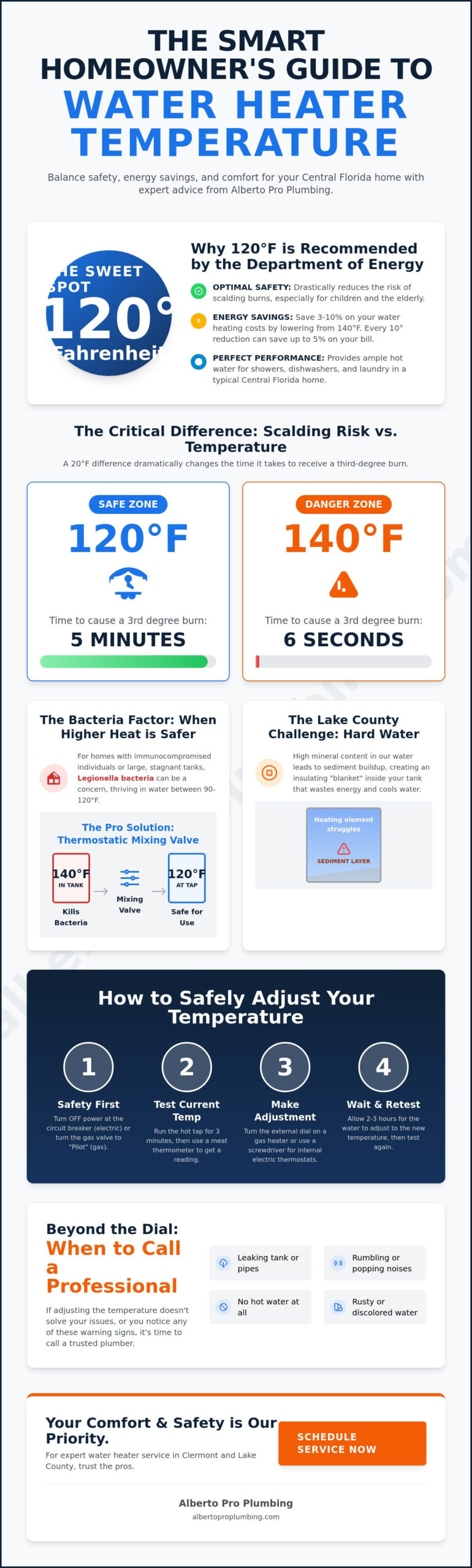
For most Clermont families, setting your hot water heater temperature to 120°F is the ideal balance of safety and savings. This standard helps prevent accidental burns while providing plenty of heat for your morning shower or the dishwasher. In Central Florida, our groundwater stays relatively warm, averaging around 74°F year-round. This means your unit doesn’t have to struggle against freezing intake water like it would in colder climates. Understanding Water heating basics can help you realize that maintaining a lower temperature reduces standby heat loss. The Department of Energy estimates that homeowners can save 3% to 10% on water heating costs by lowering the setting from 140°F to 120°F. It’s a simple adjustment that keeps more money in your pocket every month.
We see many homeowners in Lake County who leave their units at the factory setting of 140°F without realizing the risks. While that extra heat might feel nice, it’s often unnecessary for the typical Florida lifestyle. Our team at Alberto Pro Plumbing focuses on helping you find the setting that fits your specific household needs. We look at your family size, the age of your plumbing system, and your daily water usage to give you a professional recommendation.
The Scalding Risk: Protecting Lake County Families
Safety is our top priority. High temperatures are dangerous, especially for children and seniors whose skin is thinner. At 140°F, it takes only 6 seconds of exposure to cause a third-degree burn. If you lower that setting to 120°F, it takes nearly five minutes for the same level of injury to occur. This buffer provides a critical safety net for toddlers who might turn a handle too far. We often recommend installing anti-scald valves in modern Clermont plumbing systems. These devices maintain a safe output even if someone flushes a toilet elsewhere in the house. It’s a reliable, professional fix that keeps your family safe from sudden temperature spikes.
Legionella and Bacteria: The Case for Higher Heat
Some situations require a higher hot water heater temperature of 140°F. Bacteria like Legionella thrive in stagnant water between 90°F and 120°F. If you have a compromised immune system or live in a high-occupancy home where water sits in a large tank, the higher setting might be safer for your health. However, you don’t have to choose between bacteria and burns. Our Pro technicians can install a thermostatic mixing valve. This allows the tank to stay at 140°F to kill pathogens while automatically mixing in cold water before it reaches your tap. It ensures your water is sanitized but leaves the faucet at a safe 120°F.
Step-by-Step: How to Safely Adjust Your Water Heater Temperature
Safety is the top priority for Clermont families. Before you touch any internal components, you must shut off the power at the circuit breaker for electric units or turn the gas valve to the “Pilot” or “Off” position. This prevents accidental shocks or gas leaks while you work. Following the CPSC scald prevention guidelines helps keep your household safe from burns while optimizing your hot water heater temperature for efficiency and comfort.
To verify your current settings, perform a “Dish Soap Test.” Run the hot water tap closest to the tank for 3 minutes to clear the lines. Fill a glass, add a single drop of dish soap to break surface tension, and use a digital meat thermometer to get a reading. If the number is above 120 degrees, it’s time to dial it back. Once you make an adjustment, give the tank a 2-hour window to reach the new set point before testing again. Checking too soon results in inaccurate readings and unnecessary tinkering.
Adjusting a Gas Water Heater
Gas units are generally easier to manage because the thermostat dial sits on the outside of the tank near the bottom. You won’t need tools for this. Most modern gas valves don’t show specific degrees. Instead, they use markings like “Low,” “A,” “B,” and “C.” Typically, the “A” setting represents 130 degrees, while “B” jumps to 140. For most Clermont homes, the ideal spot is between the “Low” and “A” markings. If the pilot light happens to go out while you’re turning the dial, follow the manufacturer instructions on the tank jacket to relight it safely.
Adjusting an Electric Water Heater
Electric models require a bit more “Pro” effort. You’ll need a screwdriver to remove the two access panels located on the side of the tank. Behind these panels, you’ll find layers of insulation and the actual thermostats. Most electric tanks use a dual thermostat system. You must set both the top and bottom thermostats to the exact same temperature, ideally 120 degrees. If they aren’t synced, one element will work significantly harder than the other, leading to a premature burnout of the heating element. After you use a flat-head screwdriver to turn the dials, ensure you tuck the insulation back into place perfectly. This padding is vital for heat retention. If you feel uncomfortable working around high-voltage wires, the team at Alberto Pro Plumbing can handle the calibration for you during a routine maintenance visit.
Why Your Clermont Water Temperature Might Feel Off: The Hard Water Factor
Clermont homeowners face a specific challenge that many national DIY guides overlook: the high mineral content of Lake County municipal water. Our local water is “hard,” meaning it carries high concentrations of dissolved calcium and magnesium. Over time, these minerals settle at the bottom of your tank, creating a thick sediment “blanket.” This layer of rock-like buildup acts as an insulator, sitting directly between the burner and the water it’s trying to heat. Your system works overtime, but the heat stays trapped in the sediment instead of warming your water.
This buildup leads to frustrating false readings. You might check your dial and see it’s set to the recommended 120°F, yet your morning shower feels more like 100°F. The thermostat thinks the water is hot because the heat is concentrated at the base of the tank, but the actual water circulating through your pipes remains lukewarm. While lowering your water heater temperature is a smart move for energy efficiency, it won’t fix a system that’s choked by scale.
You can often hear this problem before you feel it. If your unit makes a “popping” or “rumbling” sound, it’s a sign of “kettling.” This happens when water gets trapped under the sediment layer and boils into steam bubbles. It’s a clear signal that your hot water heater temperature is being compromised by mineral debris. Our family-owned team sees this daily in Clermont neighborhoods, and we know exactly how to clear it out to restore your comfort.
The Solution: Annual Tank Flushing
A professional tank flush is the most effective way to restore heating efficiency. By draining the tank and flushing out the accumulated calcium, we remove the barrier that prevents the burner from doing its job. Because of our local water conditions, we recommend flushing your system every 12 months. This is more frequent than the national average, but it’s necessary to maintain an accurate hot water heater temperature in Central Florida. If your system is sluggish or noisy, our expert team offers professional drain cleaning services near me to keep your plumbing running at peak performance.
Preventing Buildup with Water Conditioning
The proactive way to handle hard water is to treat it before it reaches your heater. Water softeners and conditioners neutralize minerals, preventing them from “frying” your heating elements or coating the bottom of your tank. By managing these minerals, you can extend the lifespan of your water heater by 3 to 5 years. This investment keeps your water clean and your energy bills low. At Alberto Pro Plumbing, we take pride in our clean, professional workmanship. You can learn more about protecting your home in our guide to water conditioning installation.
Maximizing Efficiency and Safety: Hot Water Best Practices
Setting your hot water heater temperature is just the first step toward a high-performing home. To keep that heat from escaping before it reaches your master shower, consider insulating your hot water pipes. This simple fix can raise water temperature at the faucet by 2°F to 4°F. This allows you to lower the setting at the tank and save on monthly utility bills without sacrificing comfort.
Many Clermont neighbors ask if water heater blankets are necessary. If your tank was manufactured after 2015, it likely features high-level internal insulation (R-16 or higher). Adding a blanket to a modern tank sitting in a 90°F Florida garage often provides very little benefit. However, if you are heading out of Lake County for a vacation, always use the “vacation” setting. This drops the internal temp to roughly 50°F. It prevents the unit from cycling unnecessarily while you are away, saving energy while keeping the system ready for your return.
Keep the 10-year rule in mind. Most traditional tanks reach the end of their reliable lifespan between 8 and 12 years. If you notice your hot water heater temperature fluctuating or the water taking significantly longer to heat up, the internal components are likely failing. Replacing a unit before it develops a major leak prevents property damage and restores your home’s efficiency immediately.
Strategic Upgrades for Consistent Heat
- Recirculation pumps: These systems keep hot water moving through your pipes so it is ready the moment you turn the knob, eliminating the “wait time” that wastes gallons of water.
- Tankless options: These units heat water on demand. This eliminates the storage tank entirely, which settles the 120°F versus 140°F bacteria debate because no water is left standing to grow pathogens.
If you are ready for a more reliable system, contact a professional plumber for water heater installation to discuss which model fits your family’s specific needs.
Energy Rebates in Central Florida
Upgrading your system in 2026 is more affordable than ever for local homeowners. The federal government currently offers tax credits through the Energy Efficient Home Improvement Credit. This can cover 30% of the cost, up to $2,000, for qualified heat pump water heaters. Local providers like Duke Energy also offer residential incentives for high-efficiency upgrades that reduce the strain on the local grid.
Our team at Alberto Pro Plumbing helps you navigate these local utility programs to ensure you get the maximum return on your investment. We prioritize clean, professional installations that meet all current Clermont codes and standards. We treat your home with respect and ensure the job is done right the first time.
Beyond the Dial: When to Call a Professional Plumber in Clermont
Adjusting the thermostat is a simple DIY task, but some water heater issues require specialized tools and training. If you find yourself constantly fiddling with the dial because the water stays lukewarm, you might have a broken dip tube. This plastic tube directs incoming cold water to the bottom of the tank to be heated. When it cracks or disintegrates, cold water mixes with the hot water at the top of the tank. You’ll never achieve the correct hot water heater temperature with a faulty dip tube, no matter how high you turn the setting.
Safety is the primary reason to keep your hands off the internal components. Electric water heaters carry 240 volts of electricity, which is enough to cause severe injury. Never touch exposed wiring or attempt to replace heating elements without proper training. You should also avoid DIY repairs on the Temperature and Pressure (T&P) Relief Valve. This valve prevents your tank from becoming a pressurized hazard. If it’s leaking or looks corroded, it needs a professional replacement immediately. A licensed plumber in Clermont provides precise digital calibration to ensure your hot water heater temperature is accurate to within a single degree, giving you total peace of mind.
Signs of an Imminent Tank Failure
- Rusty water: If your hot water looks brown or tea-colored, the internal sacrificial anode rod has likely failed. This rod’s job is to rust so your tank doesn’t. Once it’s gone, the water begins eating the steel lining of your tank.
- Leaking from the bottom: Moisture or puddles at the base of the unit are serious red flags. This usually indicates a breach in the inner tank wall. This situation is always an emergency plumbing repair that requires a rapid response to prevent floor damage.
- Age check: Look at the manufacturer’s sticker for the serial number. On most units, the first two numbers represent the year. If your heater is over 10 years old, it has reached the end of its reliable lifespan.
The Alberto Pro Advantage
We are a local, family-owned business that treats Clermont residents like neighbors. You won’t get a generic tech from a big-box retailer when you call us. We pride ourselves on our “Clean Service” promise. This means we use floor protection, wear shoe covers, and leave your home exactly as we found it. We believe in honesty and high-tier craftsmanship, ensuring every job meets our “Pro” standards. Don’t wait for a cold shower or a flooded garage to take action. Schedule a water heater health check with Alberto Pro Plumbing today to ensure your system is safe, efficient, and ready for the year ahead.
Take Control of Your Home’s Comfort and Efficiency Today
Maintaining the perfect balance of comfort and efficiency in your home starts with a simple turn of a dial. By setting your hot water heater temperature to 120 degrees Fahrenheit, you follow safety standards established by the Department of Energy to prevent scalding while reducing energy loss by up to 5 percent. Remember that Clermont’s hard water leads to mineral buildup that often forces units to work harder than necessary. Regular maintenance helps you avoid the 10 percent efficiency drop frequently seen in neglected systems. If you notice strange noises or inconsistent heat, it’s time to rely on a professional to ensure your system lasts through 2026 and beyond.
Alberto Pro Plumbing is a family-owned and operated business dedicated to serving Central Florida. We offer a 24/7 emergency response for all Lake County residents; you’re never left in the cold when a crisis hits. Our team provides a clean service guarantee, which means we leave your property exactly as we found it. We take pride in our craftsmanship and our commitment to our neighbors. When the time comes to find the right help, our Clermont homeowner’s checklist for hiring a plumber walks you through exactly what to look for so you never have to settle for less than the best.
Get Expert Water Heater Service in Clermont Today
We look forward to helping you keep your water running perfectly all year long.
Frequently Asked Questions
Is 120 degrees hot enough to kill bacteria in a water heater?
While 120 degrees is the standard setting for safety, it’s not hot enough to kill Legionella bacteria. According to OSHA, water should be stored at 140 degrees to effectively eliminate these pathogens. Bacteria can survive and even multiply in tanks kept at lower settings. If you have a compromised immune system, our Pro team recommends keeping the tank at 140 degrees and using a mixing valve to prevent burns at the tap.
How much money do I save by turning down my water heater by 10 degrees?
You’ll typically save between 3 percent and 5 percent on your water heating costs for every 10 degrees you lower the temperature. The Department of Energy reports that water heating accounts for about 18 percent of the average home’s energy use. Lowering your hot water heater temperature reduces standby heat loss from the tank. This simple adjustment keeps more money in your pocket without requiring a major lifestyle change.
Why does my hot water run out so fast in my Clermont home?
Sediment buildup from local mineral deposits is the most common reason hot water runs out quickly. In Clermont, 85 percent of homes deal with hard water that creates a thick layer of scale at the bottom of the tank. This scale takes up space and insulates the water from the heating element. Our family-owned team often finds that a professional flush restores your tank’s full capacity and heating efficiency immediately.
Can I change the temperature on my water heater myself?
You can typically adjust the thermostat yourself using a flathead screwdriver after turning off the power at the circuit breaker. Most electric models have two thermostats hidden behind metal access panels on the side of the unit. You must set both to the same level to ensure the heater operates correctly. If you’re uncomfortable working with electrical components, we’re always ready to handle this task safely during a routine maintenance visit.
What happens if I set my water heater to 140 degrees?
Setting your unit to 140 degrees eliminates bacteria but increases the risk of third degree burns to just 6 seconds of exposure. This higher hot water heater temperature is often necessary for older dishwashers that don’t have internal heating elements. However, it also leads to higher energy bills and faster mineral buildup inside the tank. We suggest installing anti-scald devices if you choose this higher setting to protect your family.
Why is my water heater making a knocking sound after I changed the temperature?
A knocking sound usually indicates that kettling is occurring due to heavy sediment buildup on the heating elements. When you increase the temperature, the elements work harder and steam bubbles get trapped under the mineral scale. These bubbles eventually pop, which creates the loud banging or knocking noise you hear. This is a clear sign that your tank needs a professional cleaning to prevent the bottom from eventually leaking.
How often should I check the temperature setting on my water heater?
You should check your temperature setting at least twice a year during your seasonal home maintenance. We recommend testing the actual water temperature at the tap using a thermometer to ensure the thermostat remains accurate. Mechanical parts can wear out over time, leading to a 5 to 10 degree drift from the original setting. Regular checks help maintain comfort and prevent unexpected energy spikes in your monthly utility bill.
Does Florida’s hard water affect how hot my water gets?
Florida’s hard water contains high levels of calcium and magnesium that form a crusty barrier on your heating elements. This scale acts as an insulator, which means your heater has to run 20 percent longer to reach your desired temperature. Over time, this buildup can make the water feel lukewarm even if the thermostat is set high. We provide specialized descaling services to keep your Clermont home’s system running at peak performance.